
Tift County Release Window
Tift County does not publish an official page labeled as a 24-hour release list. The sheriff's mobile release page is instead labeled “48 Hour Release.” It is the best official short-window view found for people recently processed out of the Tift County Jail. The separate OffenderIndex county roster has a “Bookings Made in the Last 24 Hours” tab. That tab answers who entered the booking process, not who left custody. Treating it as a release list can reverse the meaning of the record.
A name can also move off the current-inmates view before every connected system has refreshed. The physical release, roster update, VINE event, court entry, and public-record response do not have to appear at the same moment. A transfer may look like a release from Tift custody even though another agency still holds the person. For a fact that must be confirmed, call the jail at 229-388-6020 or request the release record.
Check Tift County Recent Releases
Use the release-specific source first, then confirm identity and the type of departure. This sequence keeps the booking feed from being mistaken for a release feed.
- Open the sheriff's “48 Hour Release” mobile page and check the recent entries.
- Compare the name with the current-inmates view on OffenderIndex. A current roster record generally means the person is still held at the jail.
- If the short window has passed, use “Inmates by Booking Date” and select “Include Previous Inmates In Search.”
- Match the full name and any shown booking facts. Common names require more than a surname match.
- Call the Tift County Jail or seek the sheriff release record for the date, time, reason, and any transfer destination.
- Check the court record when the reason depends on a bond order, sentence, dismissal, or other disposition.
For one named person whose release may be older, the Tift County released-inmate search path explains the longer records trail. It includes court, state prison, federal, and notification sources that a same-day list cannot cover.
Tift County Release Fields
The live interface can change, and the research did not confirm every displayed field on the mobile page. Read only what the current record actually supplies. The official release record held by the sheriff may provide more detail than the short public view.
| Field | What it can establish |
|---|---|
| Name | The identity attached to the jail event, subject to matching details. |
| Booking or inmate identifier | Connects the release event with the correct jail record when shown. |
| Release date and time | Marks when Tift County custody ended in the agency record. |
| Release reason | May distinguish bond, sentence completion, court order, or transfer. |
| Agency or destination | May show that custody shifted rather than ended. |
The 24-hour booking view has a different field purpose. It can show who was booked, booking dates, and roster data, but those facts do not establish a later release. Use its previous-inmate option as a discovery aid and ask for the source record when precision matters.
Confirm Tift County Release Records
When the person is not in the 48-hour view, contact the jail at 229-388-6020. The sheriff's Public Information page says open-record requests may be verbal or written and are handled under O.C.G.A. 50-18-70. David Haire is listed as the Open Records Officer, with Captain Chad Davis as alternate. Fees may apply, and the office provides an estimated preparation cost.
Ask for a booking sheet and the release date, release time, release reason, bond details, or transfer destination. Include the full name, an approximate booking date, the arresting agency, and a case or warrant number if known. A court clerk is the better source for the order that caused release. Georgia VINE can provide future status alerts. GDC's offender search applies only if the person entered state prison custody. The Tift County 72-hour release guide explains why no official three-day list is available and how to search beyond the short window.
Tift County Custody Status
The current-inmates roster is a custody tool. A prior-inmate search or recent-release entry points to an earlier jail event. Neither replaces the release record. Someone who bonds out may next appear through a court disposition or VINE status event. A person sent to GDC may appear in the state offender search. A federal hold can lead to U.S. Marshals custody, while an immigration detainer can lead to ICE custody. In those cases, leaving the Tift County Jail is a transfer, not freedom from all custody.
Check the agency named in the latest record. For a county bond or local sentence release, use the sheriff and court. For a state-prison discharge, use GDC. For a federal sentence, use the Bureau of Prisons locator. This custody-type split prevents a county roster result from being stretched beyond its scope.
How Tift Release Slips Move
The City of Tifton bond instructions show how a city case can lead to release from the Law Enforcement Center. After a cash bond is completed, the records clerk issues a receipt and calls an officer. The officer then carries the release slip to the jail so staff can process the person out. The city asks people to wait about one hour after arrest before calling because the arresting officer must finish paperwork first.
A paid bond and physical release are separate events. Clerk processing, officer delivery, and the jail's final custody steps explain why a current-roster update can follow payment. The jail record establishes when custody ended.
Tift County Bond Options
Cash bonds before 5 p.m. go through Municipal Court, while the police department accepts them after 5 p.m. The city also describes appearance, property, and transfer bonds. Each route has its own documents and timing.
A property bond requires a Tift County property owner, proof that the tax bill is paid, and photo identification. A transfer bond starts with sealed paperwork from the other county's sheriff and must arrive with photo identification. These rules explain why a bond record and the final jail release time may differ.
Tift Mobile Release Page
The sheriff site has a mobile entry point, but no separate named iPhone or Android sheriff app was confirmed. The accurate local source is the mobile web page labeled “48 Hour Release.” It should not be described as an app, and its window should not be renamed as 24 hours. The OffenderIndex booking tab remains useful for identifying recent intake, while the prior-inmate option helps find an older booking after the name leaves the live roster.
The OffenderIndex screen shows the controls for current inmates, last-24-hour bookings, booking-date searches, and previous inmates.
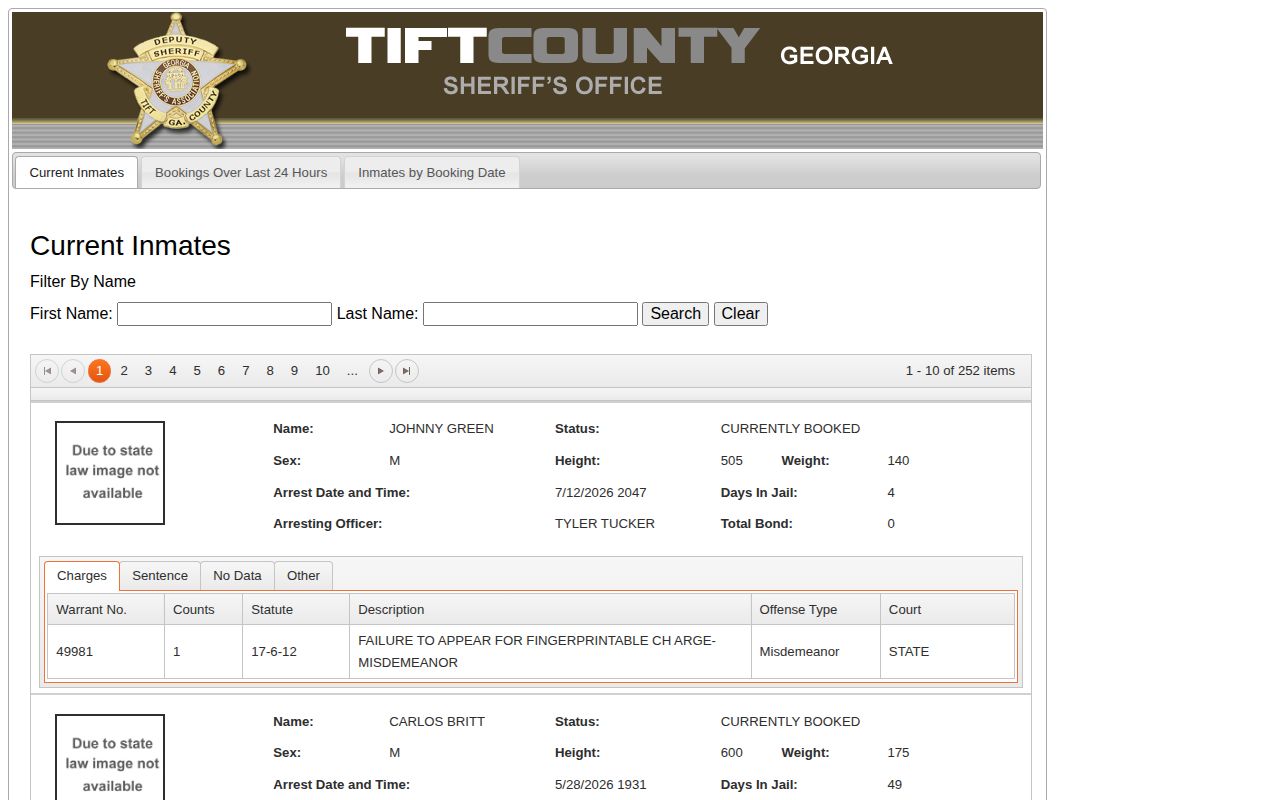
The image helps distinguish the booking filter from the sheriff's separate release view.
Tift Release News Limits
The Tift County Sheriff press page and local WALB reports can surface public notices, arrests, and major custody changes. They are news channels, not complete lists of released people. A person may be released without appearing in either source, and a story may remain online long after custody changes.
The sheriff press screen shows the sort of official announcements available there.
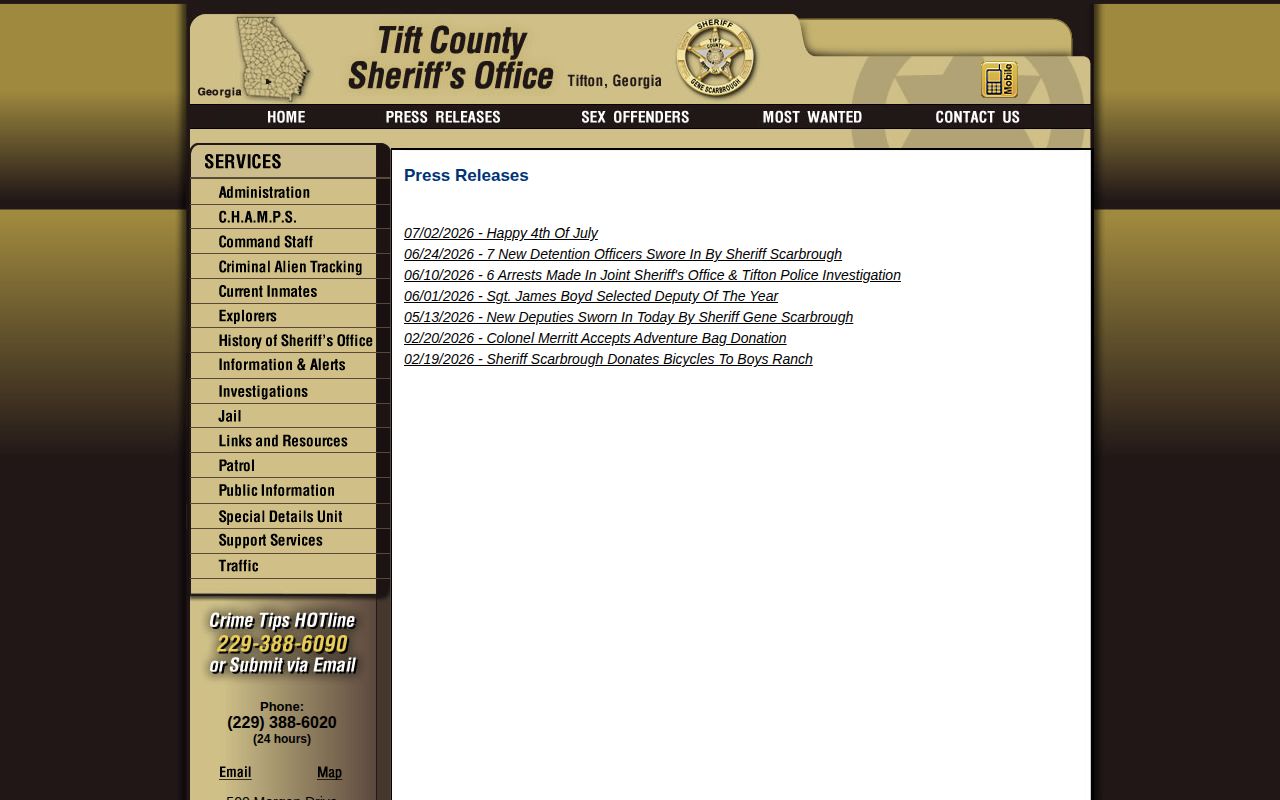
Use such reports for context, then return to jail or court records to verify the event.
Tift Courts Confirm Release Reasons
The jail and court answer different parts of a same-day release question. The Tift County Jail can document when physical custody ended. A court file can show the order or case event that made the departure possible. Magistrate Court handles early steps such as bond hearings, warrant hearings, pre-arraignments, and preliminary hearings. State Court handles misdemeanor criminal matters and certain traffic cases. Superior Court records cover felony proceedings. City arrests may also involve Tifton Municipal Court and its release-slip process.
Ask for the record that matches the case. A bond order may show the terms set by the court. A disposition can show dismissal, a plea, or a sentence. A probation order can explain why a person is no longer held but still has court duties. The sheriff release record may state “court order” without reproducing all of those terms. For that reason, a recent-release entry is a starting fact, not a full account of the case.
Contact the Clerk of Superior and State Court at 229-386-7810 for the records within those courts. Magistrate Court can be reached at 229-386-7907 for its own proceedings. Tifton Municipal Court uses 229-391-3967 for city matters. Give the clerk a name and case number when known, and ask for the specific order or docket entry rather than a broad search.
Tift Release Sources by Custody
A local jail departure should be traced through local sources first. The mobile 48-hour page, OffenderIndex, the jail phone line, and sheriff records all speak to Tift County custody. The Georgia Department of Corrections offender search is for state-prison records. It can show a state facility, sentence data, and release information after a transfer into GDC control, but it cannot confirm that a local cash bond was processed.
Georgia VINE is useful when a user wants notice of a later status change from a participating agency. A notification can arrive by phone, text, or email after registration. Still, the agency record remains the source for the exact event. The State Board of Pardons and Paroles database applies after release to parole, while the Department of Community Supervision Tifton Field Office handles local felony supervision. Those records concern post-release status, not the day's jail exit list.
Federal systems are narrower. The Bureau of Prisons locator covers federal prison custody. The U.S. Marshals Service may control a federal detainee housed in a local jail, and ICE handles immigration detention. When the Tift release record names a receiving agency, follow that agency. If it does not, avoid guessing from a missing roster entry. A direct request for the destination is the sound next step.