
Tift Parole vs Probation
Parole and probation can both place a released Tift County person under rules in the community, but they start in different ways. The State Board of Pardons and Paroles makes parole decisions. The Georgia Department of Community Supervision, or DCS, carries out community supervision for felony parolees and felony probationers. A Tift County court imposes probation as part of a sentence. The Board may grant parole after part of a state prison sentence has been served.
| Point | Parole | Probation |
|---|---|---|
| Who orders it | State Board of Pardons and Paroles | Sentencing court |
| Custody path | Release from state prison before sentence end | Community sentence or part of a split sentence |
| Public check | Parolee Database and Board records | Court disposition; public case notes may be limited |
| Local supervision | DCS Tifton for the assigned area | DCS Tifton for adult felony probation in the assigned area |
| End point | Final parole discharge or sentence end | Court-ordered completion or discharge |
A person who bonded out of the Tift County Jail / Tift County Law Enforcement Center is not automatically on either form of supervision. Bond release means the case is pending under court terms. The criminal disposition later shows whether probation was ordered. By contrast, a person leaving a GDC prison may be released on parole, may reach a maximum release date, or may enter another lawful custody path.
- Parole
- Conditional release from state prison under Board authority before the full sentence expires.
- Probation
- A court-ordered sentence served in the community under stated terms.
- Discharge
- The formal end of a supervision term or sentence obligation.
- Absconder
- A supervised person reported as having stopped contact or left supervision without permission.
Verify Tift Post-Release Supervision
Use a custody-first check. The Board's Parolee Search is the public route for someone already released on parole. It accepts first name, last name, and race, and partial search terms may return several records. Compare the record with known facts. The Inmate TPM Lookup serves a different purpose: it concerns a person still in prison whose parole timing is under review.
- Confirm whether the person left county jail, state prison, or court custody. The Tift County released-inmate search paths separate those systems.
- For a former state prisoner, search the Parolee Database by name and narrow any partial-name results carefully.
- If the person is still in GDC custody, use the TPM tool only to check tentative parole review timing.
- For probation, obtain the sentencing disposition from the Tift County court that handled the case. Look for a probated or split sentence.
- Use the DCS Tifton Field Office to confirm office geography and official reporting contact. Full case notes may remain confidential.
Public supervision details have limits. Georgia open-records guidance treats statewide probation records and much parole information as confidential unless properly declassified. A public lookup can establish broad status, while the sentencing court, Board, or DCS remains the source for an official case-specific answer. Never treat a no-result response as proof that all supervision has ended.
The official Georgia Parolee Search screen shows the state tool used for a released parolee.
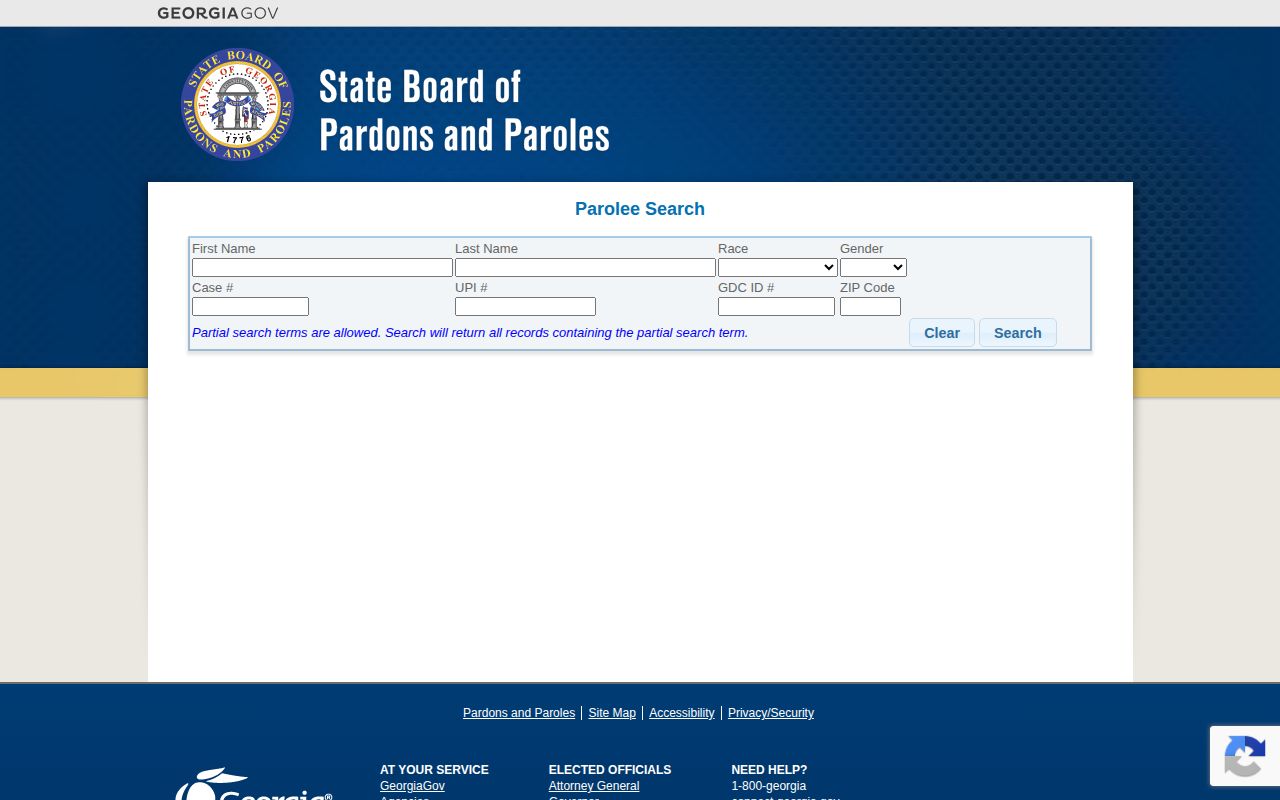
That database fits post-release parole status, while a probation check begins with the court judgment and DCS.
Tift Post-Release Supervision Landscape
A person returning to Tift County may pass through several local and state systems after custody ends. The sentencing court remains the source for a probation order. The State Board of Pardons and Paroles remains the parole decision authority. DCS then handles community supervision for adult felony parolees and probationers assigned to the area. This division matters because the Tift County Jail cannot confirm whether a state supervision term is active, and DCS does not replace the court or Board record that created it.
Local supervision does not follow the name of the former jail. It follows the person's assigned DCS reporting area and the terms in the governing order. The Tifton office serves a multi-county region that includes Tift. A released person may therefore report in Tifton even after leaving a state prison elsewhere, while someone released from the local jail may have no DCS supervision at all. The release record and court disposition establish which path applies.
Tift County DCS Office Details
DCS Tifton is the named local contact for adult felony parole and probation supervision assigned to its area. Its service region includes Irwin, Tift, the Tifton Circuit, Turner, and Worth. The Board still controls parole decisions, while DCS can confirm office geography and route an inquiry to the proper reporting location.
Georgia DCS Tifton Field Office115 South Davis Avenue
Tifton, GA 31694
Phone: 229-386-3503
Fax: 912-387-2456
Monday-Friday, 8:00 a.m.-4:30 p.m.
Coordinating Chief Michelle Smith
The official Tifton Field Office page supplies the local contact and counties served.
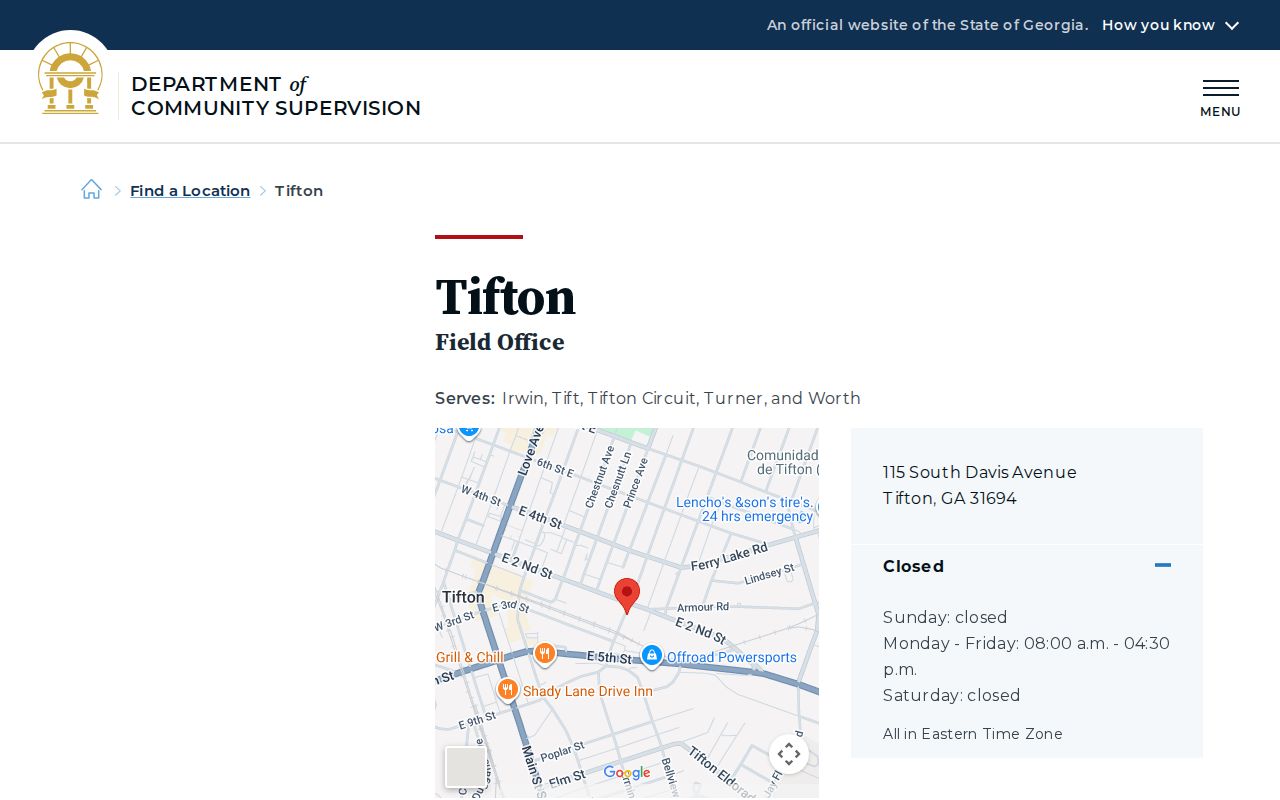
This local listing is the sound route for office location and contact, not a substitute for a court order or Board decision.
Tift Parole Decisions and TPM
A Tentative Parole Month, or TPM, is neither a scheduled release day nor a final grant of parole. The Board says it is the month for final review and, when appropriate, the setting of a parole release date. Good conduct and required program completion can affect it. GDC misconduct reports usually lead to postponement or cancellation. Detainers and release-plan issues may also delay the path.
Georgia's public monthly Board meetings should not be read as individual parole hearings. An official Board meeting explanation says those meetings cover operations, policy, and presentations, while Board members vote parole cases electronically each day. For a named person, use the TPM application before release and the parolee database after release, then seek official confirmation from the Board.
The TPM lookup application visually separates tentative parole timing from released-parolee status.
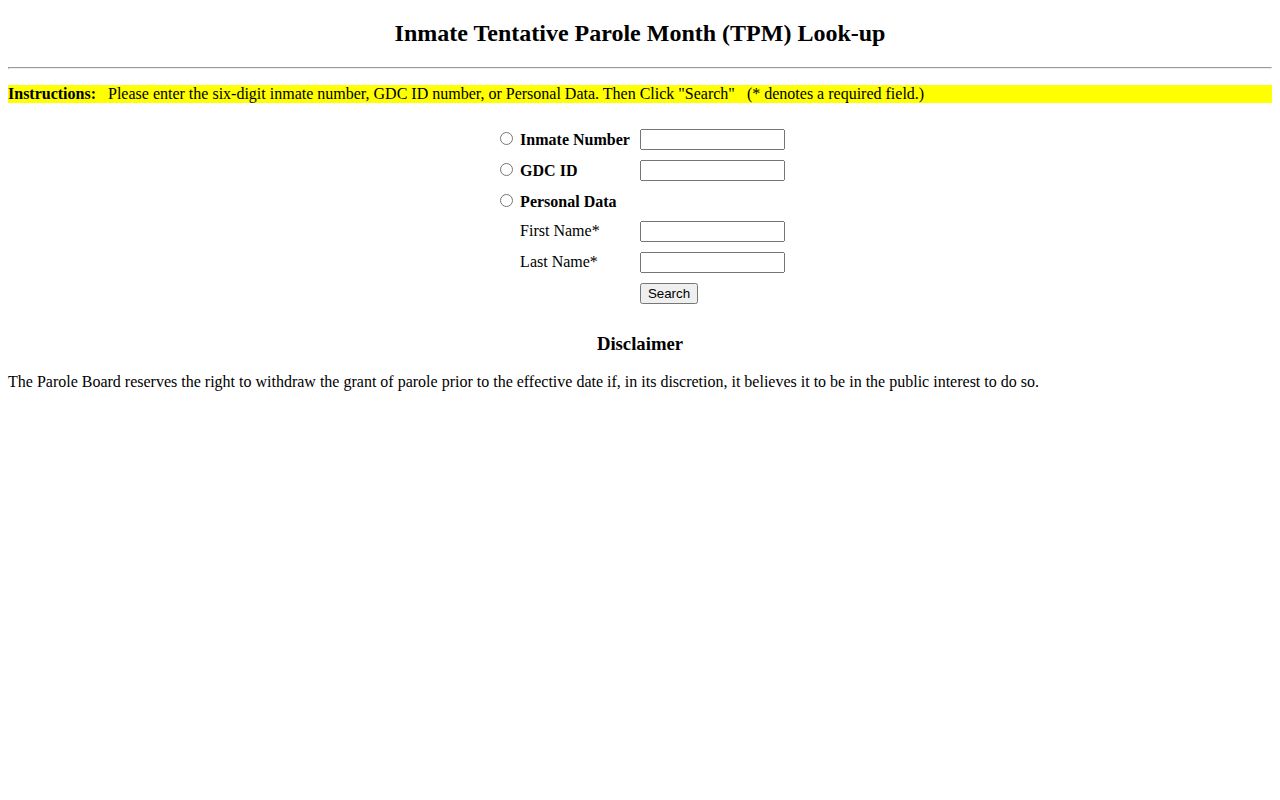
A TPM result should always be described as tentative and conditional.
Tift Supervision Warrants and Violations
Conditions of parole or probation can include reporting, lawful conduct, approved travel, fees, treatment, or other terms stated in the governing order. The exact terms come from the court, Board, and supervision documents. A reported violation does not by itself describe the final result. It may lead to investigation, a warrant, a hearing process, modification, or revocation.
The Board's violations and revocations page explains that a parole warrant may issue after an alleged breach. If a person is accused of absconding or is unavailable for a hearing, a temporary revocation order may suspend the running of the sentence from the order date. That status is not ordinary release. A warrant or absconder notation should be verified with the agency shown in the official record.
VINELink may send a custody-status alert when a participating agency reports a change. It does not replace parole or probation records, and it does not decide whether a violation occurred. For a new custody event, use the agency named in the alert and then confirm the supervision action.
A revocation is the formal withdrawal of conditional release or supervision after the required process. It should not be assumed from an arrest, a jail entry, or a wanted notation alone. The new booking may concern an unrelated charge, an alleged technical violation, or a Board warrant. Check the current jail agency for physical custody, then use the Board or sentencing court for the legal status of supervision. If another county holds the person, DCS Tifton may still be the listed field office, but the holding agency controls immediate custody information.
Probation violations follow the court path rather than the parole Board's decision path. The filed docket may show a petition, warrant, hearing, modification, or revocation order. Some details remain restricted, yet the public court record can still identify the case and the action taken. A parole violation should be checked through the Board's official source. Keeping those routes separate prevents a county court allegation from being mistaken for a state parole result.
Tift Supervision Record Restrictions
Ending supervision does not erase the arrest, court, or custody trail. Record restriction is a separate Georgia process for eligible records. The Tift sheriff Public Information page lists a $25 record-restriction charge per arrest. The City of Tifton procedure cites O.C.G.A. 35-3-37 and requires action by the requester, arresting agency, and prosecuting attorney. The city lists a $25 department fee and a possible separate $25 GCIC fee.
Those local steps correct or restrict eligible records. They do not change a current probation or parole order. A person seeking restriction should use the arresting agency and prosecutor named in the case, while questions about active supervision remain with the sentencing court, Board, and DCS.
Confirm Tift Supervision Discharge
Supervision ends through the authority that imposed it. Parole may end by final discharge or sentence expiration under Board records. Probation ends through the court term and any discharge order. A jail roster cannot prove either event because it tracks physical custody, not the full life of a sentence.
Keep the final order, discharge record, or agency confirmation with the relevant release documents. If the person still appears in one public tool after discharge, compare dates and ask the originating office to correct or explain the record. The court clerk answers questions about a probation sentence. The Board answers parole-decision questions. DCS confirms local office routing and supervision administration.
A useful confirmation request identifies the person, case or GDC number when known, the type of supervision, and the date shown in the public source. Ask whether the status is active, completed, revoked, or transferred to another office. Do not ask the county jail to interpret a Board record, and do not ask the Board to certify a Tift court's probation order. Each record custodian can only confirm the part its agency created.
Note: Public databases can lag behind an official order, so use the dated court or agency record when the entries conflict.