
Tift County VINE Coverage
Georgia VINELink is the public portal for Victim Information and Notification Everyday. Participating agencies send custody events to the system. In Tift County, the sheriff announced local VINE implementation in 2025. A user can look for a specific person and register for status notices rather than repeatedly checking a broad roster.
VINE is an event and notification service. A current-custody result can identify the holding agency and reported status. A release notice means that the participating agency reported a custody change, but it does not establish the final court outcome. It also may not explain whether departure meant bond, sentence completion, transfer, or another form of release.
Search Tift County VINELink
- Open the Georgia VINELink state page.
- Choose the Georgia custody or offender search in the live interface.
- Enter the person's name or available ID. Check spelling and known alternate names.
- Compare the agency and identity fields before opening a result. Do not rely on a shared name alone.
- Read the reported custody status and agency. Note the time or event label if the screen supplies one.
- If no result appears, check the Tift jail roster, GDC, parolee database, court record, BOP, or ICE source that matches the custody type.
VINELink is not a universal archive. The Tift County released-inmate lookup path explains how to continue when a person has aged out of a short jail view or moved to another system.
The Georgia VINELink search screen shows the state entry point used for this check.
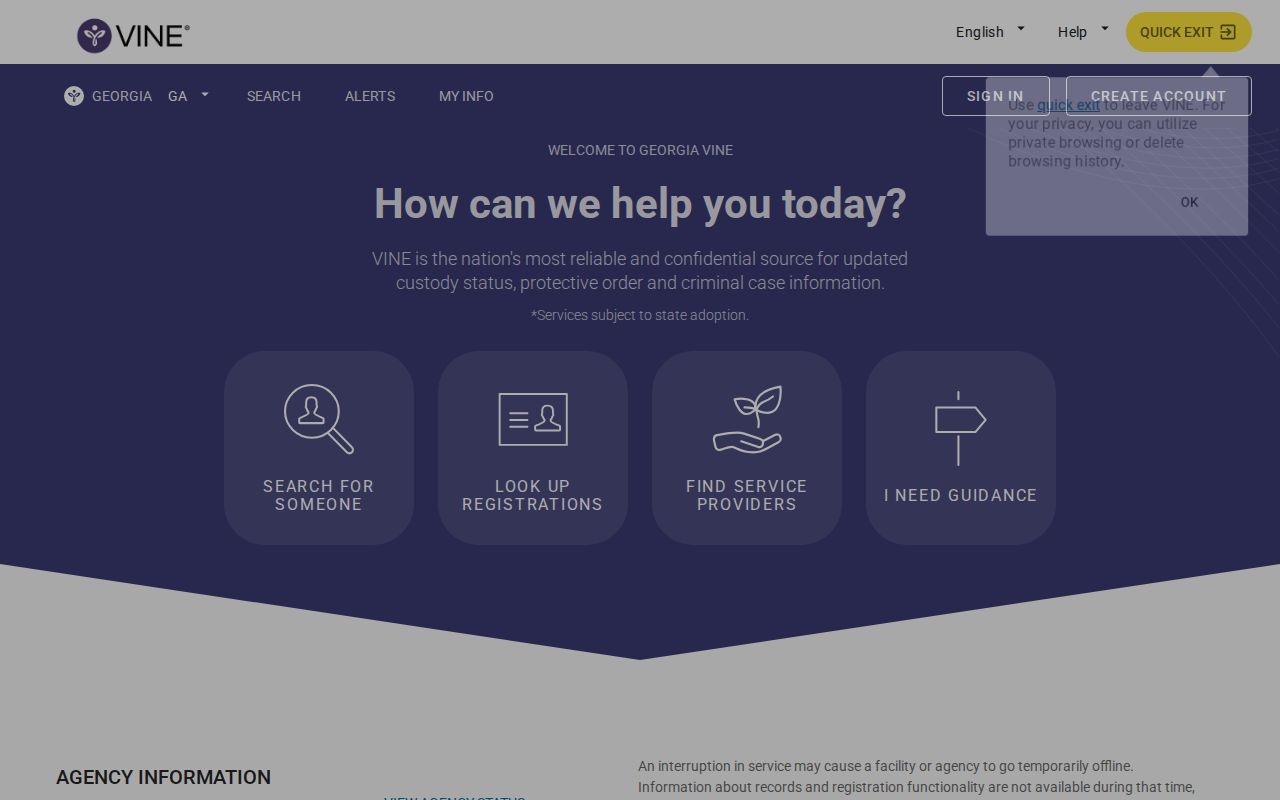
The interface is the starting point for a named search and notification registration.
Tift VINELink Release Fields
Fields depend on the live agency feed. Read them as reported custody data, not as a complete criminal case history.
| Field | How to read it |
|---|---|
| Name or offender ID | Helps connect the result to one person; additional identity facts may still be needed. |
| Custody status | Shows the latest state supplied by the participating agency. |
| Agency or facility | Identifies which custody source reported the event. |
| Status event | May report release, transfer, or another change. |
| Notification options | Lists the available contact channels for that record. |
A released event does not prove dismissal or sentence completion. Court disposition records answer what happened in the case. The sheriff release record answers when and why local physical custody ended. GDC records answer state-prison status and release dates.
Match the Tift Person
A VINELink alert is useful only when it follows the right person. Begin with the exact spelling used in the booking record. Try a known alternate name only when the first search fails. If the live result shows an ID, agency, date of birth, or other identity detail, compare it with reliable information already known. A common name by itself is not enough.
The reporting agency also matters. A Tift County Jail result should point to the local participating custody source. A GDC result concerns state prison custody. A person may have records in both systems at different points, especially when the county jail held someone until state-facility space became available. Select the record tied to the custody episode being followed.
If uncertainty remains, do not register and hope the alert is correct. Check the sheriff roster handoff to OffenderIndex or the GDC offender search first. The public roster has Current Inmates, a recent-bookings tab, and a booking-date search that can include previous inmates. Those details can help establish which agency and episode belong to the person.
Register Tift Release Alerts
Registration follows the matching person record. Available channels can vary in the live interface.
- Open the correct VINELink result.
- Choose registration for custody-status changes.
- Select an offered channel, such as text, email, or phone.
- Enter the contact information carefully.
- Complete the confirmation step. If phone registration asks for a PIN, retain it and use it to confirm receipt.
- Save the registration details and update them if the phone number or email changes.
Do not register against a result until the identity and reporting agency match. A notice tied to the wrong person is not useful. Keep the jail and court contact paths available because a notification can arrive after the physical event or may describe a transfer in broad terms.
Read Tift Custody Alerts
A Tift County VINELink notice reports a change supplied through the participating system. Read the event label, agency, and time details together. “Released” should first be understood as release from the reporting agency's custody. It does not automatically tell the reader that charges were dropped, a sentence ended, or all supervision stopped.
The next check depends on the event. A bond release points to jail and court records. A transfer can point to another jail, GDC, USMS, or ICE. A prison release may lead to the State Board of Pardons and Paroles database and the Department of Community Supervision. Tift's local DCS field office serves Tift and nearby counties, but VINELink does not replace its supervision records.
What if the alert arrives after the event? Automated feeds can lag the physical change. For urgent confirmation, contact the agency shown in the notice. Then obtain the jail release record or court order when the reason matters.
Confirm Tift VINELink Events
VINELink does not replace the Tift court docket and does not show every transfer reason. It is not a universal mugshot archive. A missing result may mean a spelling issue, a nonparticipating feed, a data delay, or that the person belongs in another custody system.
For a county-jail event, call Tift County Jail at 229-388-6020 or request the release record. For a state prisoner, use the GDC Find an Offender search and verify important facts with GDC Inmate Records. Use the BOP locator for federal prison custody and ICE's locator for immigration detention. A parolee may instead appear in the State Board of Pardons and Paroles database.
Tift County VINE Launch
WALB reported that the Tift County Sheriff's Office implemented VINE on March 27, 2025. The report describes free notifications by text, email, or phone when an offender's status changes through the criminal justice process. That local adoption is important because it ties the general Georgia portal to Tift custody events.
The WALB implementation page documents the local notification channels.
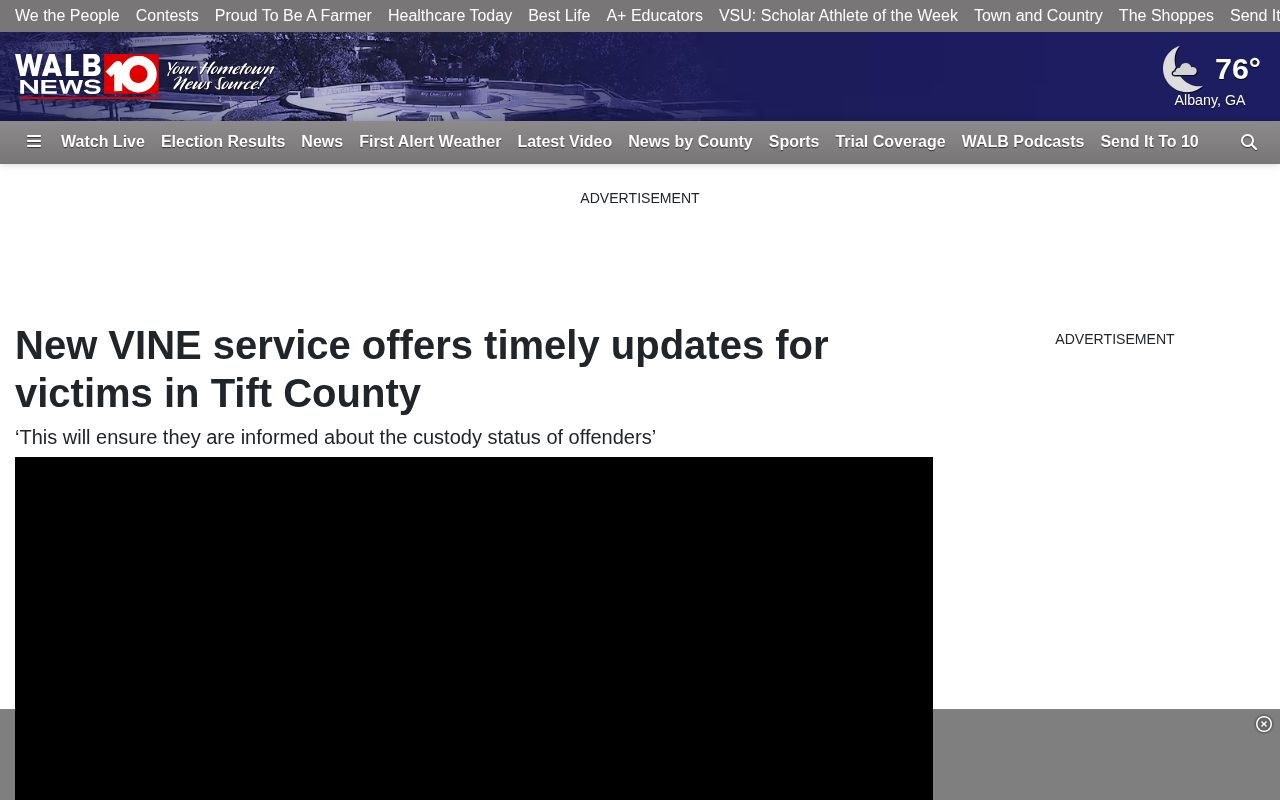
The report supports using VINE for alerts while the originating agency remains the source for final verification.
Tift Release Notification Layer
Tift County's local VINE date makes this more than a generic statewide lookup. WALB reported the sheriff's implementation on March 27, 2025. The report says the free service can deliver status-change updates by text, email, or phone call as a person moves through the criminal justice process. That is the distinctive local notification layer for a family member or another person following one custody record.
Registration is different from a one-time search. A search shows the status available when the page is checked. Registration asks the system to send a later notice after the participating agency reports an event. Saving the correct registration details, completing any confirmation step, and keeping contact information current are therefore part of the process.
VINE also does not create the underlying event. The sheriff, GDC, or another participating agency supplies custody information. If an alert seems wrong or unclear, the originating office is the place to verify it. The jail release record can explain the time, reason, and destination of a local departure. The court record can explain the legal action behind that departure.
When Tift VINELink Is Blank
No result is not proof that the person was never booked or has not been released. First check spelling and any known alternate name. Then identify the custody type. For a local arrest, use the Tift sheriff roster link and the OffenderIndex option to include previous inmates in a booking-date search. For a state sentence, use GDC Find an Offender.
Federal criminal and immigration custody require different tools. The BOP locator covers federal prison records, while ICE operates its own detainee locator. A transfer from Tift County Jail can make a person disappear from the county roster without producing a community release. The correct destination system must be checked before drawing a conclusion.
Court and open-records paths close the remaining gap. Tift County Sheriff's Office accepts verbal or written open-records requests and lists an Open Records Officer and alternate. A focused request can ask for the booking and release record, date and time of release, reason, and transfer destination. A court clerk can provide the bond order, disposition, sentence, or probation order that explains why local custody ended.
For a person sentenced to Georgia state prison, review GDC fields such as current facility, sentence information, release date, and maximum release date. GDC advises users to verify important information through Inmate Records and Information. A state date answers a state-custody question and should not be treated as the date the person left Tift County Jail.
Parole timing also needs care. A Tentative Parole Month is a review marker, not a final release notice. Once a person is released on parole, the parolee database and DCS records become more useful than the jail roster. VINELink does not calculate the parole or probation term and does not certify final discharge from supervision.
Keep the registration active only as long as it serves the notification need. The live portal can provide options to update or cancel it. If a phone number or email changes, revise the saved details so later alerts do not go to an old destination. A completed confirmation is vital for phone notices that use a PIN.
Preserve the agency name and event wording from any alert. Those details make a follow-up call precise. Asking the Tift jail about a stated release event is more effective than asking for a broad history. If the alert points to GDC or another agency, direct the verification request there.