
Tift County Release Paths
A release from the Tift County Jail, also called the Tift County Law Enforcement Center, ends that facility's physical custody. It does not always mean the person went home. A person may post bond, finish a local sentence, receive a court order, move to probation, transfer to the Georgia Department of Corrections, or leave under another agency's hold. The agency that receives the person determines the next search. The jail booking trail remains local, while a prison transfer creates a GDC trail. Parole and felony probation add records held by state supervision agencies.
The public roster is a current-custody tool. When a name disappears, absence alone proves little. It may reflect community release, transfer, or a short delay in the public feed. The sheriff's mobile 48 Hour Release view and the OffenderIndex previous-inmate option provide useful clues. Official confirmation can require the jail record, bond slip, court disposition, or an Open Records Act response. A court disposition is the entry showing how the court resolved or changed the case.
- Bond
- Money or another approved promise that permits release while the case continues.
- Time served
- Release after credited jail time satisfies the term ordered by the court.
- Discharge
- The end of a custodial sentence or a later end to supervision, depending on the record.
- Detainer
- A request or hold from another authority that may lead to transfer instead of community release.
Tift County Inmate Release Types
The release reason controls where Tift County released inmate records appear next. Local bond and sentence releases remain tied to the sheriff and the relevant court. A transfer to state prison calls for a GDC search. Release to parole calls for the parolee database and local supervision office. Probation usually arises from a court sentence and does not mean the parole board released the person.
| Release or exit | Meaning | Best next record |
|---|---|---|
| Bond | Custody ends while the case remains open | Jail release entry, bond receipt, and court docket |
| Sentence complete | A local jail term expires, less lawful earned-time credit | Sheriff record and sentencing court |
| Probation | The person serves all or part of a sentence in the community | Court disposition and DCS when felony supervision applies |
| Parole | The parole board authorizes release from state prison under conditions | GDC, parolee database, and DCS |
| Transfer | Another jail, GDC, federal authority, or ICE receives custody | The receiving agency's locator or records office |
| Dismissal or court order | A judicial action removes the basis for continued custody | Superior, State, Magistrate, or Municipal Court record |
Tift County Release Record Fields
Tift County does not publish one universal release certificate. The full trail may span jail, court, corrections, and supervision records. A sheriff booking record can identify the booking and physical exit. The court record explains the legal cause. State records document later prison custody or parole. Ask for named fields rather than a broad request for “everything,” since a precise request helps the records officer locate the right material.
| Field | What it may show |
|---|---|
| Name and booking number | The identity and local jail event tied to the release |
| Booking and release date or time | When local custody began and ended |
| Arresting agency and charges | Who initiated the custody and the allegations recorded at booking |
| Bond amount or release reason | Whether bond, sentence completion, court action, or another cause ended custody |
| Destination or transfer note | Whether another jail, GDC, ICE, or other authority received the person |
| Disposition and sentence | The court result, probation term, dismissal, plea, or jail-time credit |
| Release date, MRD, or TPM | Separate GDC and parole timing terms for a state prisoner |
Why is the roster not enough? Current Inmates answers who is housed now. It does not reliably state why a prior inmate left, whether another agency took custody, or what the court ordered.
Request Tift County Release Records
The Tift County Sheriff's Office Public Information page accepts verbal or written open-records requests and cites O.C.G.A. 50-18-70. It names David Haire as Open Records Officer and Captain Chad Davis as alternate. The requester pays applicable fulfillment costs, and the office provides an estimated preparation cost. The page does not publish a fixed fee or guaranteed completion time for a release-record request, so neither should be assumed.
- Identify the person by full legal name and add a known booking date, arresting agency, case number, or warrant number.
- Ask for exact fields, such as the booking sheet, release date and time, release reason, bond amount, or transfer destination.
- Send the request to the sheriff's open-records officer. Ask for a cost estimate before work starts if cost is a concern.
- Use the correct court for the bond order, sentence, dismissal, probation order, or other legal reason for release.
- For a state-prison record, follow GDC's direction to verify through Inmate Records and Information rather than requesting it from the county jail.
500 Morgan Drive, P.O. Box 46
Tifton, GA 31793
Jail, inmates, visitation, and bonds: 229-388-6020
Reports and warrants: 229-388-6021
Administrative hours: Monday-Friday, 8:00 a.m.-6:00 p.m.
Georgia's Open Records Act permits access subject to legal exemptions and redaction. Juvenile, sealed or restricted, medical, active-investigation, and confidential supervision material may not be available in full. Sheriff records can confirm the physical jail exit, but the court is usually the better source for why it occurred.
Tift County Bond Release Types
The City of Tifton Services & Fees page describes a practical city-case release route. It separates cash, appearance, property, and transfer bonds. Cash bonds before 5 p.m. go through Tifton Municipal Court, while the police department accepts them after 5 p.m. A property bond requires a Tift County property owner, a paid tax receipt, and photo identification. A transfer bond requires sealed paperwork from the other county's sheriff plus photo identification.
An appearance bond uses an approved bonding company. A transfer bond begins outside Tift County and must arrive with the issuing sheriff's seal intact. Each method creates its own paperwork, but none resolves the pending charge. The court docket remains the place to track what happens after release. If the arrest did not arise in a City of Tifton case, confirm the correct bond office and process with the jail or court rather than applying the city instructions to every arrest.
Tift County Release Slip Timing
Payment or completed papers do not make the jail door open at once. After a cash bond is completed, the records clerk issues a receipt and calls an officer. That officer takes the release slip to the Tift County Law Enforcement Center. The city also asks people to wait about one hour after arrest before asking about bond because the arresting officer must finish the paperwork. This is a sourced process detail, not a promised release time.
The city bond instructions shown in the captured source illustrate how court and police paperwork reaches the county jail.
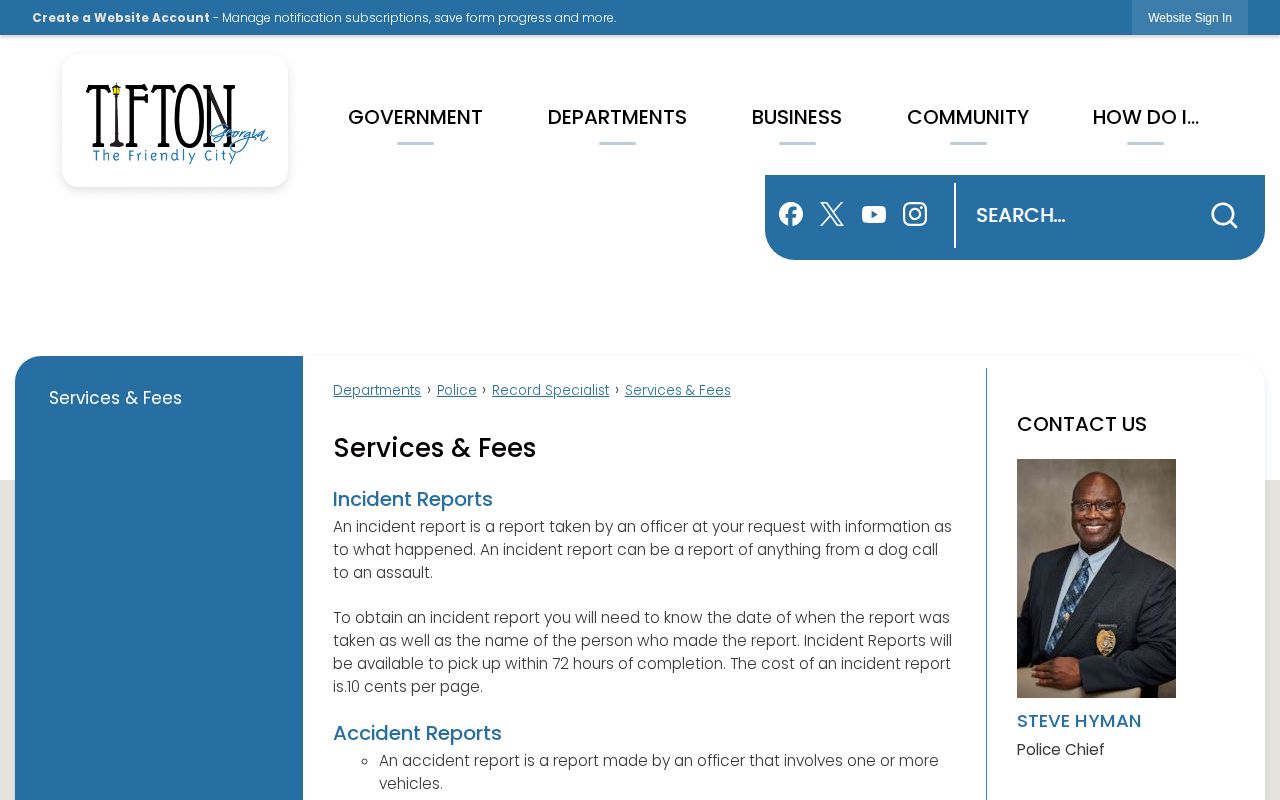
The release slip explains why a paid bond and the public roster may not change at the exact same moment.
Restrict Tift County Release Records
Record restriction, often called expungement in casual speech, is not the same as release. The sheriff lists a $25 record-restriction fee per arrest. The City of Tifton explains that O.C.G.A. 35-3-37 may permit restriction of eligible criminal-history records when the prosecuting attorney approves. Its process requires portions completed by the requester, arresting agency, and prosecutor. The city lists a $25 department fee and a possible separate $25 GCIC fee if the request is forwarded.
Restriction affects access to eligible criminal-history material. It does not automatically erase every court entry, jail file, news report, or state corrections record. The outcome and agency matter. A dismissal, nolle prosequi, acquittal, or other eligible result should first be confirmed in the court record. Then the requester can follow the arresting agency's form route. O.C.G.A. 50-18-70 governs open-record access, while O.C.G.A. 42-4-7 requires sheriffs to keep records of persons committed to jail and addresses release of sentenced county inmates after earned-time allowances.
Search Tift County Released Inmates
Start with the system that last held the person. Most local searches begin at the sheriff's Current Inmates handoff and continue to OffenderIndex Tift County. Check Current Inmates first. Then use the booking-date view and select “Include Previous Inmates In Search.” The 24-hour tab shows bookings, not releases. Tift's release-specific public view is instead the sheriff's 48 Hour Release page.
- Check Current Inmates. A current match means the public roster still shows local jail custody.
- Check the mobile 48 Hour Release view for a very recent local exit.
- Search OffenderIndex by booking date with previous inmates included. Treat a past record as a clue, not final proof.
- Call the jail or request the booking and release entry when the release reason is unclear.
- Check the correct court for the bond order, sentence, dismissal, or probation disposition.
- If transfer to state prison is possible, search GDC. For parole, use the parolee database; for federal or ICE custody, use the matching federal locator.
For a same-day feed, see the 24-Hour Release List, which explains Tift's booking-versus-release mismatch. For timing questions, the Projected Release Date page separates county, GDC, and parole dates.
Tift County GDC Release Search
The Georgia Department of Corrections Find an Offender tool applies to state-prison custody. It is not the place to confirm a routine Tift County bond release. Use it after a prison sentence, a transfer from the county jail to GDC, or a later GDC release. Search by name, description, GDC ID, or case number. A strong match uses more than a common name.
| Search or record field | Use |
|---|---|
| Name | Broad starting point; compare other identifiers |
| GDC ID or case number | More precise state-record match |
| Description | Helps separate people with similar names |
| Facility and status | Shows whether state custody is current |
| Release date | Signals a state-prison release when displayed |
| MRD or TPM reference | Shows maximum sentence timing or tentative parole timing, not the same concept |
Maximum Release Date, or MRD, is the GDC date if the whole sentence is served, excluding parole decisions. Tentative Parole Month, or TPM, marks a parole review stage and is not final. GDC asks users to verify public query information in writing with Inmate Records and Information, P.O. Box 1529, Forsyth, GA 31029. If the person only left the county jail on bond, there may be no GDC record.
Tift County Courts Confirm Release
Several Tift courts can create the order behind a jail release. Magistrate Court handles arrest warrants, pre-arraignments, bond hearings, warrant hearings, and preliminary hearings. State Court handles misdemeanor criminal offenses and certain traffic matters. Superior Court carries felony proceedings. The Municipal Court clerk maintains city dockets and sends jury-demand cases to State Court.
A person may leave the jail after a Magistrate bond order, a city release slip, a State Court disposition, or a Superior Court sentence. Ask for the docket entry, bond order, disposition, sentence, probation order, dismissal, or jail-time credit. The Tift County Clerk of Court files criminal proceedings in Superior and State Court. The clerk can explain the legal event, while the sheriff can document the physical release from jail.
The Magistrate Court source captured for Tift County release verification identifies the hearings that often affect early custody.
That court path is especially useful when the jail feed shows only that the person is no longer present.
Tift County Release Supervision
Georgia splits parole decisions from community supervision. The State Board of Pardons and Paroles decides parole. Its TPM lookup serves a person still in prison whose parole timing is under review. Its Parolee Database is the better public route for someone already released on parole. The Georgia Department of Community Supervision, or DCS, supervises felony parolees and probationers in the community.
The local DCS Tifton Field Office serves Irwin, Tift, the Tifton Circuit, Turner, and Worth. It is at 115 South Davis Avenue, Tifton, GA 31694, and is open Monday through Friday from 8:00 a.m. to 4:30 p.m. The phone is 229-386-3503. This office is a local reporting and supervision point, not the agency that made the parole decision. Probation may follow a court sentence even when the person never entered state prison.
Use Parole & Probation for the full status-verification path. An absconder is a person alleged to have stopped reporting or left supervision without authorization. A warrant or absconder status reflects a possible violation, not an ordinary completed release.
Tift County Release Notifications
Tift County joined Georgia VINE, according to a March 2025 local report. Georgia VINELink permits a one-person custody search and registration for status-change notices. Available notices reported for Tift include text, email, and phone. VINE is strongest as an alert service. It does not replace a court disposition, sentencing record, or complete booking-history archive.
Search by name or identifying number when available, then compare the agency and identity details. A release event means the participating agency reports that custody changed. It may still require a sheriff, court, or receiving-agency check to distinguish community release from transfer. The VINELink Check explains registration and confirmation in detail.
Tift County Release or Transfer
The Tift County Sheriff's Office maintains a Criminal Alien Tracking page with annual and quarterly reports. That local source supports a careful transfer warning. It does not establish any named person's immigration status. If an ICE detainer applies, leaving the Tift County Jail may mean transfer to immigration custody rather than release into the community.
Use the ICE Online Detainee Locator for current or very recent ICE custody. Federal criminal custody is different. The Federal Bureau of Prisons inmate locator covers federal imprisonment from 1982 onward. BOP explains that a past date with no facility can indicate release from BOP custody, but the person may still be supervised or held elsewhere. Before a federal prison sentence, the U.S. Marshals Service may house federal detainees in local, state, or private jails. The correct record depends on legal custody, not just the building where the person slept.
Tift County Release Lookup Comparison
Each public system answers a different custody question. Use the narrowest matching source, then confirm with the originating office when the legal reason or destination matters.
| System | Best use | What absence means |
|---|---|---|
| Current Inmates | Who is now in Tift County Jail | Possible release or transfer, not proof |
| 48 Hour Release | Very recent local release-specific view | The event may be older or not shown |
| Previous Inmates | Past booking-date clue | Try jail records and courts |
| GDC offender search | State prison custody and release | The person may never have entered GDC |
| Parolee Database and DCS | Post-prison parole and felony supervision | No conclusion about county jail release |
| BOP or ICE locator | Matching federal custody type | Check county, state, court, or other custody |
Tift County Jail Release Context
The Tift County Sheriff's Office Jail page says the jail was built in 1997 and has more than 260 beds in one facility, plus a medical unit. It prepares about 750 meals per day. More important for release research, the sheriff describes it as mainly a pretrial detention center. It also houses people serving terms up to 12 months and people waiting for state-facility space.
Those roles produce different exits. A pretrial detainee may bond out or leave after a hearing. A sentenced county inmate may complete a local term. A person awaiting state space may transfer to GDC and remain incarcerated. The phrase “released from the Tift County Jail” must therefore be checked against destination and legal status.
Tift County Release Facility
Tift County Jail / Tift County Law Enforcement Center is the single detention facility in the project facility map. The Sheriff's Office operates it at 500 Morgan Drive in Tifton. Local jail releases may go to the community after bond or sentence completion, while other exits lead to GDC, another jurisdiction, federal custody, or ICE. The facility page provides its full contact and release-confirmation route.