
Tift Projected vs Actual Release
"Projected release date" is a broad phrase, not one official field shared by every Tift County custody system. For a person serving a county jail sentence, staff calculate sentence expiration with lawful credit and earned-time allowances. For a state prisoner, the Georgia Department of Corrections may report a Maximum Release Date, or MRD. The parole board separately uses Tentative Parole Month, or TPM. An actual release date records what occurred after all orders, credits, holds, and transfer decisions were applied.
A person awaiting trial at the Tift County Jail / Tift County Law Enforcement Center normally has no sentence-based release date. Bond may be posted, a judge may change the hold, charges may be resolved, or another agency may take custody. Even after bond paperwork starts, processing must finish before the person physically leaves. The court docket and jail status are the right sources for that path.
- MRD
- Maximum Release Date, the GDC date based on serving the full state sentence, apart from parole decisions.
- TPM
- Tentative Parole Month, the Board's conditional month for final parole review, not a grant.
- Earned time
- A lawful county sentence allowance that may reduce time served.
- Detainer
- A request or legal hold from another authority that may block community release.
Find Tift Projected Release Dates
Begin with custody type. A county jail booking does not belong in the state prison search unless the person later entered GDC custody. The Tift jail houses pretrial detainees, people serving local terms of up to 12 months, and some people waiting for state-facility space. Those groups can share one building while having very different release calculations.
- Check whether the person is currently at the Tift jail, in a GDC facility, or already out. The Tift County release-search path helps separate the records.
- For a pretrial county detainee, contact the jail and the court handling bond or disposition. Do not expect a fixed sentence-end date.
- For a local jail sentence, ask for the sentence, jail-time credit, earned-time calculation, holds, and current projected completion through the jail or court record.
- For state prison, open GDC Find an Offender, enter the strongest identifiers available, and review facility, sentence, release date, and MRD data.
- Check the Board's TPM information only when parole timing applies. Keep TPM separate from MRD.
- Confirm key GDC data in writing with Inmate Records and Information when an agency-confirmed answer is needed.
The public GDC Find an Offender entry page is the state-prison starting point.
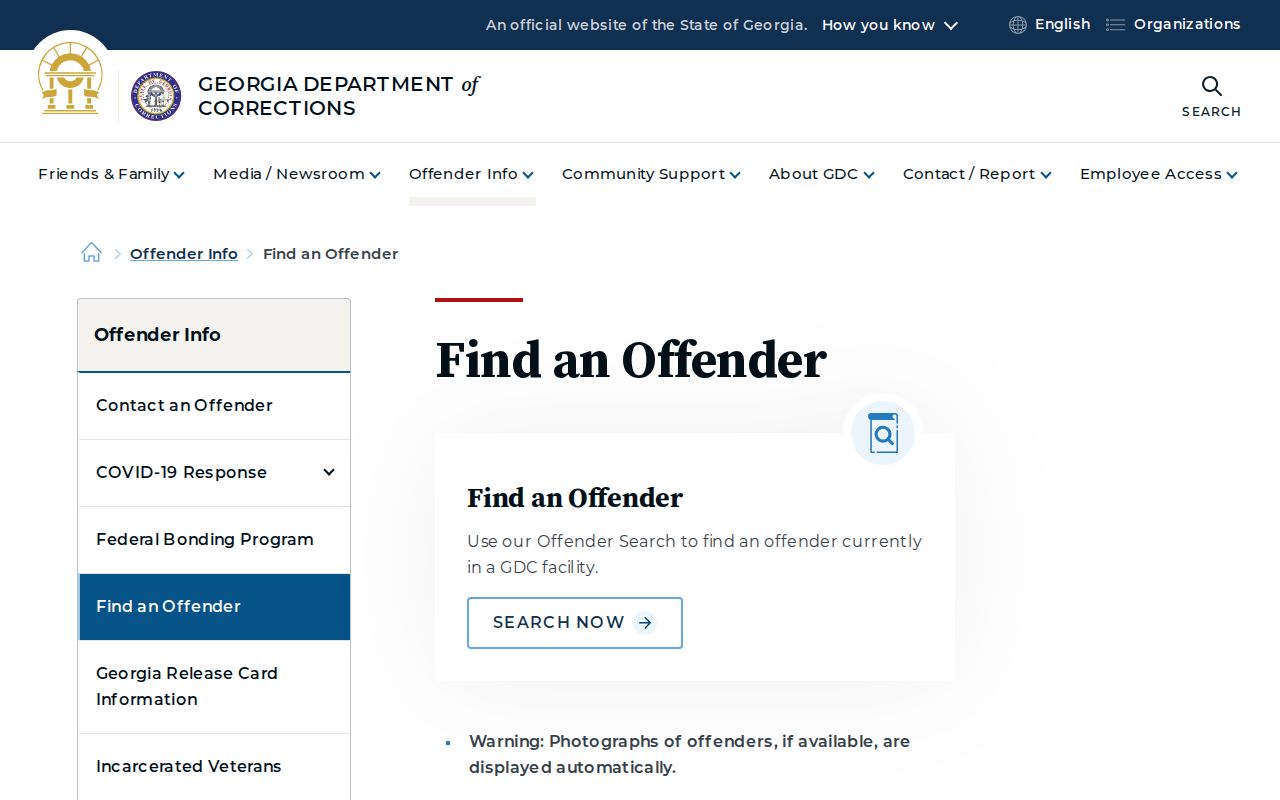
Its results apply to GDC custody and should not be used to infer a routine Tift County bond release.
GDC permits searches by name, description, ID, or case number. A common name may match the wrong person, so compare identifiers, sentence data, and facility information. If no result appears, that does not prove release. The person may remain in county custody, use another name, have no GDC history, or be held by another authority.
Three Tift Release-Date Clocks
Tift release research works best when three clocks stay separate. County earned time applies to a county sentence. GDC's MRD is a state custody concept. The parole Board's TPM concerns possible parole review. Combining them can create a date that no agency actually recognizes.
| Clock | Applies to | What it means | Source |
|---|---|---|---|
| County sentence expiration | Sentenced county inmate | Sentence end less lawful earned-time allowances | Tift jail, court, O.C.G.A. 42-4-7 |
| Maximum Release Date | GDC state prisoner | Full DOC sentence date apart from parole decisions | GDC record and Georgia Rule 125-2-4 |
| Tentative Parole Month | Parole-eligible state prisoner | Conditional final-review month, not final release | State Board of Pardons and Paroles |
The GDC family questions page says the offender tool can show facility, charges, and release date.
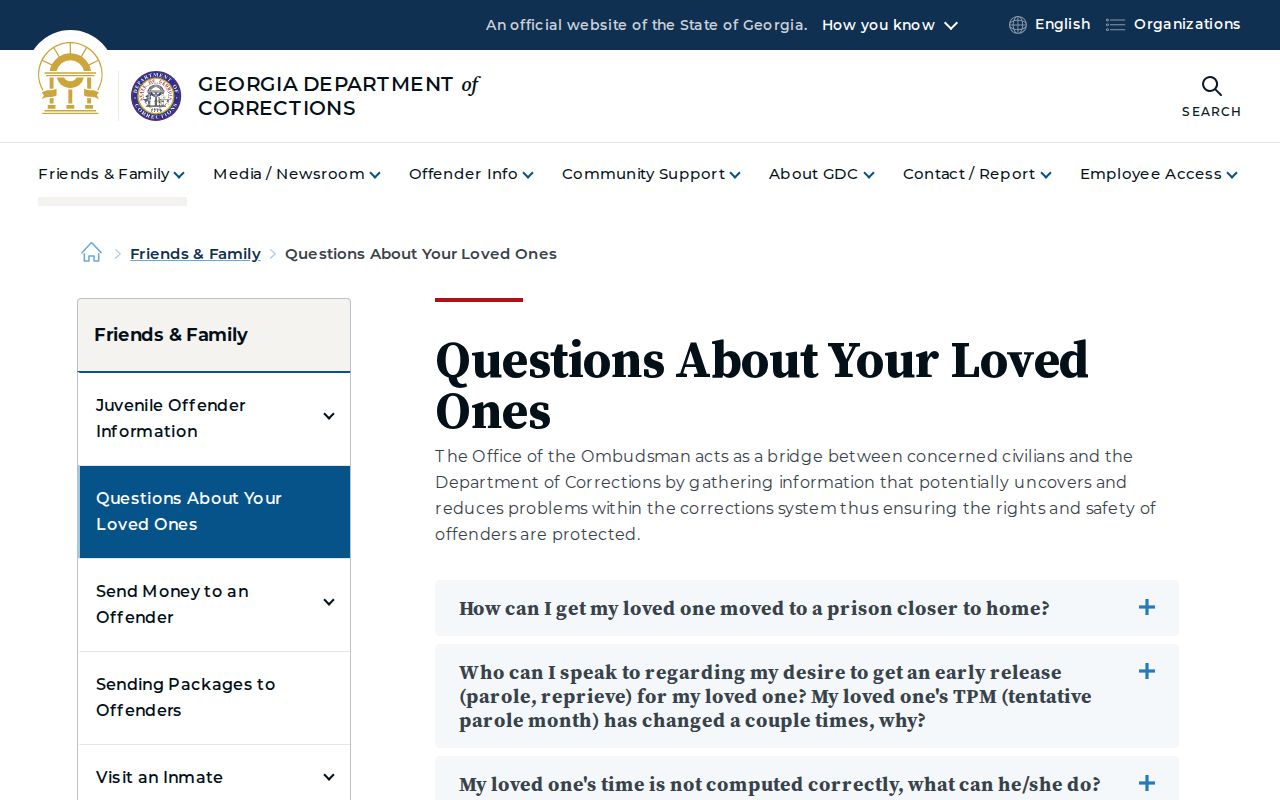
This confirms the state source to consult, while the public-search disclaimer still calls for written verification.
Tift County Earned-Time Calculation
O.C.G.A. 42-4-7 says a person sentenced as a county inmate is released when the sentence expires less earned-time allowances. It also requires the sheriff to keep a record of people committed to jail. This is the proper framework for a local Tift County sentence. It does not set a prison TPM and does not turn a pending criminal case into a fixed release date.
Several items can affect the working county date: the sentence start, prior jail credit ordered or recognized, earned-time calculation, a corrected sentence, a later court order, or a hold from another authority. Ask for the inputs, not just the final date. That approach makes it easier to see why two sources differ.
The published county-inmate statute shows the distinct earned-time rule.
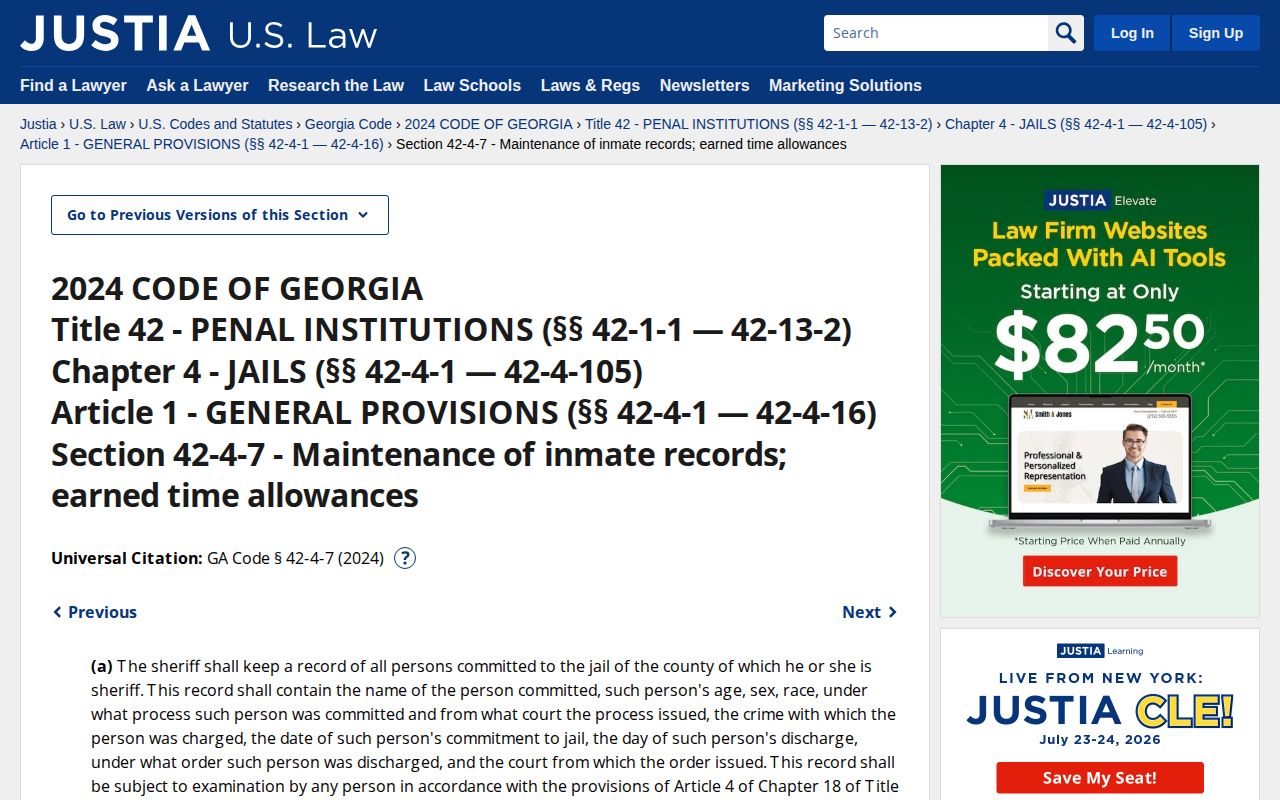
It supports a county sentence calculation, not a universal percentage for every Georgia inmate.
Note: Bond, dismissal, transfer, and pretrial court orders are release events, but none is county earned time.
Tift GDC Credit and Restrictions
For eligible state offenders, GDC's Performance Incentive Credit program may alter the MRD or TPM. GDC says eligible participants can gain up to 12 PIC points through progress in a case plan, education or vocational work, treatment, work assignments, and good conduct. The stated potential benefit is one to twelve months. It remains conditional. Certain sentence groups are excluded, including specified mandatory-minimum, non-parole-eligible, life, death, and short-sentence categories.
The GDC PIC program page describes eligibility and possible credits.
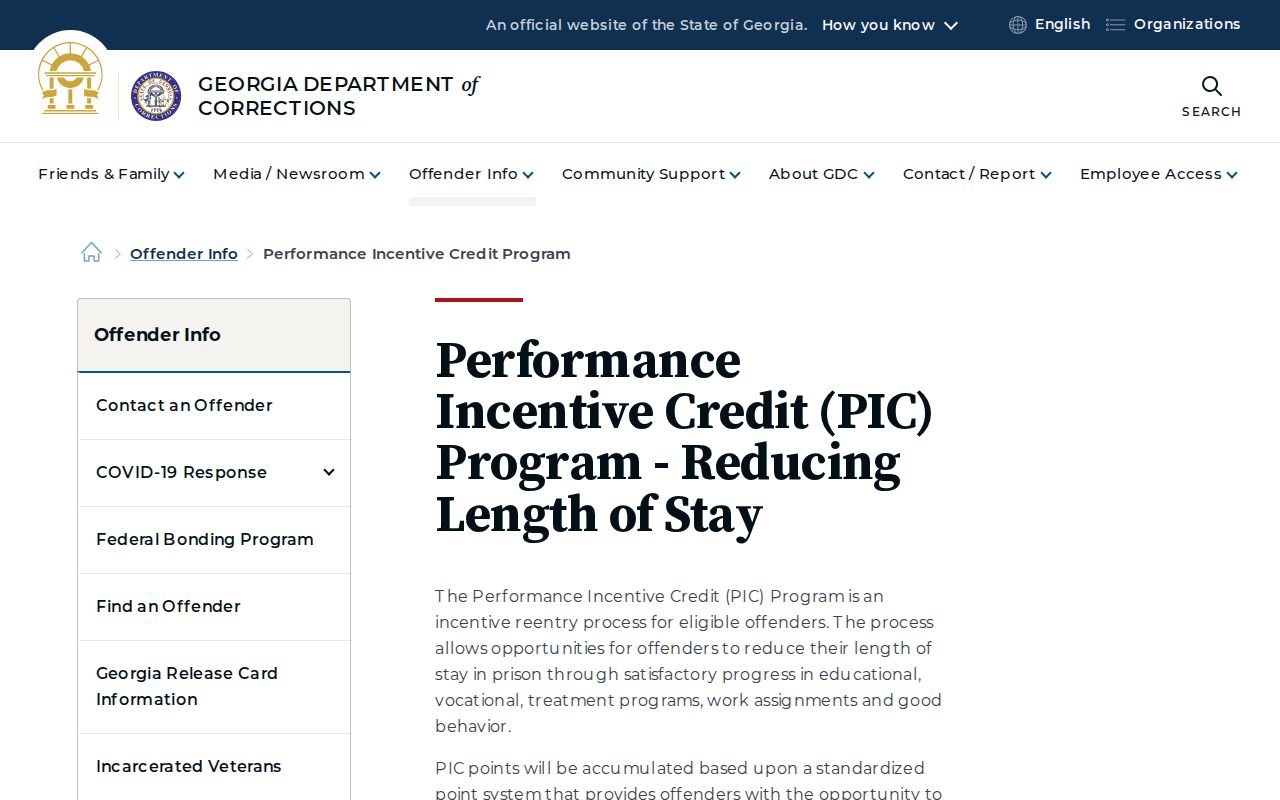
PIC should therefore be described as a possible adjustment for eligible state prisoners, never an automatic deduction.
O.C.G.A. 17-10-6.1 places strict limits on reductions for certain serious violent felony and mandatory-minimum sentences. The exact result depends on offense, sentence, and date. Georgia does not support a simple universal "85 percent" rule for Tift County jail and GDC cases. Federal good-conduct rules are a different system and should not be imported into a Georgia calculation.
Why Tift Release Dates Change
A date may move because a legal or administrative input changes. Some changes shorten the projected stay. Others delay community release without changing the underlying sentence. A transfer can also end custody in one system while custody continues elsewhere.
| Factor | Possible effect | Best confirmation |
|---|---|---|
| Jail-time or sentence credit | Moves calculated expiration when valid credit is entered | Court order and jail or GDC calculation |
| Earned time or eligible PIC | May reduce county expiration, MRD, or TPM under the applicable program | Holding agency record |
| Misconduct | May cost credit or postpone/cancel a TPM | GDC and Parole Board |
| Detainer, warrant, or hold | May prevent community release or cause transfer | Holding and receiving agencies |
| New court order or correction | May lengthen, shorten, or recalculate the term | Filed court order |
| Parole decision | May establish or delay conditional release | State Board of Pardons and Paroles |
| Program completion or parole plan | May affect a conditional TPM path | Board and GDC |
Life sentences require special care. Georgia Rule 125-2-4 states that no MRD exists for a life or death sentence. Parole eligibility for serious violent felony life sentences also varies with the offense date under Board guidance. A generic date calculator cannot settle those cases.
A hold may create the most confusing result. The Tift jail or GDC can finish its own calculation, yet another county, a federal authority, or an immigration authority may have a lawful request for custody. The person may leave the first facility on its projected date but transfer rather than enter the community. Ask whether the date means release from that agency, physical discharge to the public, or delivery to a receiving authority.
Court corrections also deserve a fresh check. A credit order, amended sentence, resentencing, or clerical correction can change the stored calculation. The filed order is the legal source, while the jail or GDC must process it in the custody system. If the docket and offender result disagree, note each update date and contact both record custodians. Do not choose whichever date is earlier.
Tift Pretrial Release Has No Date
Many people at the Tift County Jail are awaiting court action. They have a booking date, but no sentence expiration to project. A bond amount does not itself establish the time of physical release. Payment, verification, release paperwork, other holds, and jail processing can still remain. A judge may also alter bond or keep the person held. For that reason, online sentence calculators do not answer a pretrial release question.
Use the court that controls the case. Tift Magistrate Court handles bond hearings, warrants, preliminary hearings, and other early proceedings. State, Superior, or Municipal Court records may later show the controlling order or disposition. Then call the jail for current physical status. A person absent from the roster may have been released, transferred, or moved into another custody system, so request the release reason when the distinction matters.
When a city cash bond is involved, the City of Tifton describes a release slip going from records staff to the Law Enforcement Center after the bond step. That local process shows why a legal authorization and a physical exit are separate moments. The actual release record is the better source for the final time.
Confirm Tift Actual Release Dates
For a county case, call the jail at 229-388-6020 and check the court order or release record. The Tift sheriff public roster is a current-custody view, so disappearance alone does not show whether the person went home, transferred to GDC, or moved under a hold. An open-records request can seek the booking and release entry when the public screen lacks the reason or time.
For GDC, the Offender Query disclaimer directs users to verify through written correspondence with Inmate Records and Information, P.O. Box 1529, Forsyth, GA 31029. Use that route when a confirmed agency record matters. For parole, check the TPM before release and the Parolee Database after a parole release, while keeping each tool's purpose clear.
A VINELink Check can add a custody-change alert for a participating agency. It is useful for timing, but it is not a sentence calculation or court disposition. After an alert, return to the jail, GDC, Board, or receiving agency for the actual result.
Note: A past date with no current facility can indicate release in some systems, but another agency or supervision term may still apply.